
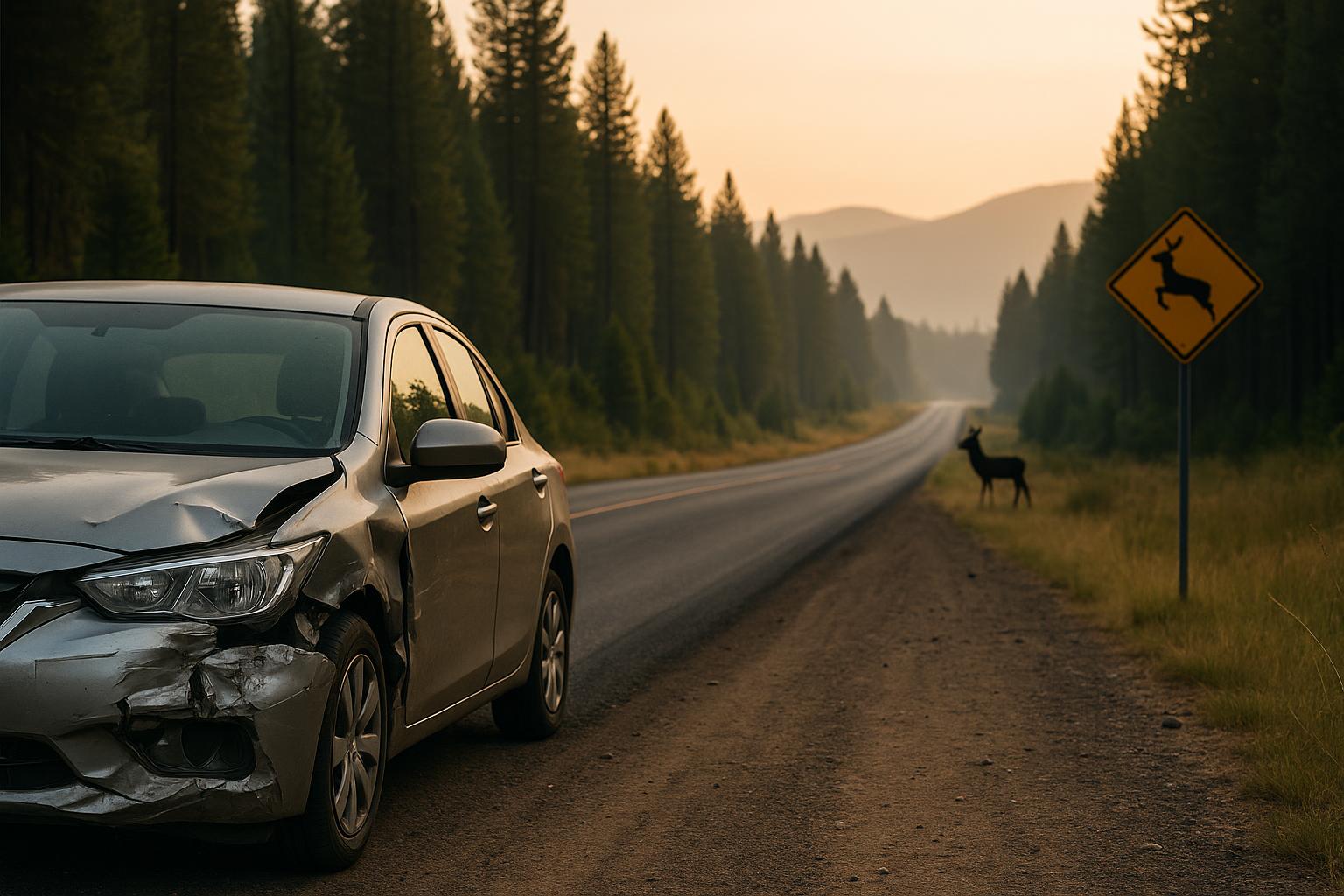
Understanding Your Rights and Responsibilities After an Animal-Related Accident in Boise
Idaho’s stunning landscapes and abundant wildlife are part of what makes our state special. However, sharing the roads with deer, elk, and other animals means collisions are an unfortunate reality for many drivers. An unexpected encounter with wildlife can lead to significant vehicle damage, serious injuries, and complex insurance claims. Knowing the correct steps to take immediately after an accident is crucial for protecting your safety and your legal rights.
This guide provides essential information for Treasure Valley drivers on how to handle an accident involving wildlife, from the initial moments at the scene to navigating the insurance claims process. At Shep Law Group, we want to ensure you are prepared and informed.
Immediate Steps to Take After a Wildlife Collision
A collision with an animal can be disorienting and frightening. Your first priority should always be safety. By following a clear set of steps, you can manage the situation effectively while protecting yourself and others from further harm.
1. Ensure Your Safety and the Safety of Others
If you can, move your vehicle to the side of the road and turn on your hazard lights to alert other drivers. If your car is in a dangerous position or it’s unsafe to exit due to traffic, remain inside with your seatbelt on. Check yourself and any passengers for injuries. If anyone is hurt, call 911 immediately for medical assistance.
2. Do Not Approach the Animal
An injured animal, no matter its size, can be scared, in pain, and unpredictable. Approaching it poses a risk of further injury to you or the animal. Even if it appears deceased, it’s best to keep a safe distance. Large animals like elk or moose can be particularly dangerous when frightened. Your responsibility is to report the incident, not to handle the animal yourself.
3. Report the Accident
In Idaho, you are required to report any collision that injures or kills a large game animal, such as a deer, elk, or moose, to the Idaho Department of Fish and Game (IDFG) or local law enforcement. Failing to report the incident can result in penalties. Furthermore, if the collision causes property damage exceeding $1,500, you must also file an accident report with the Idaho Transportation Department (ITD) within 10 days. A police report provides official documentation that is essential for your insurance claim.
4. Document the Scene Thoroughly
If it is safe to do so, take pictures from multiple angles. Capture the damage to your vehicle, the animal (from a distance), the location of the accident, and any relevant road conditions or signage. This photographic evidence can be invaluable when you file your insurance claim, helping to verify the circumstances of the collision.
Understanding Fault and Insurance in Animal Collisions
One of the most common questions after hitting an animal is, “Who is at fault?” In most cases, these incidents are considered “no-fault” accidents because wildlife is unpredictable. However, the specifics of your insurance coverage and the actions you take after the collision play a significant role in the outcome of your claim.
Comprehensive vs. Collision Coverage
Damage caused by hitting an animal is typically covered under the comprehensive portion of your auto insurance policy, not collision coverage. Comprehensive insurance handles damage from non-collision events like theft, vandalism, weather, and animal strikes. If you only carry liability or collision coverage, your policy likely will not pay for the repairs to your vehicle. It’s crucial to review your policy to understand what is covered.
What Happens If You Swerve?
Instinct often tells us to swerve to avoid an obstacle, but with wildlife, this can lead to more dangerous outcomes like a rollover or a collision with another vehicle. It is generally safer to brake firmly and maintain control of your vehicle. If you swerve and hit another car or object, the legal fault may shift to you. In Idaho, a modified comparative negligence rule applies, meaning your ability to recover damages depends on your percentage of fault. If you are found 50% or more at fault, you cannot recover any compensation. This makes understanding your actions and their consequences vital. If you find yourself in a complex situation involving other vehicles, consulting with a car accident attorney can help clarify your rights.
Did You Know?
- Idaho implemented a “roadkill salvage” law in 2012, allowing individuals to legally take possession of certain game animals killed in a collision. You must report the incident and obtain a free salvage permit from the IDFG.
- The most active times for wildlife on Idaho roads are dawn and dusk, especially during the fall migration season from September to November.
- If you see one deer cross the road, slow down immediately. Deer often travel in groups, and others are likely to follow.
- According to a State Farm analysis, Idaho drivers have a one in 136 chance of hitting a deer, making it one of the higher-risk states.
The Boise Local Angle: High-Risk Areas and Mitigation
Drivers in Boise, Meridian, and across Ada and Canyon Counties are no strangers to wildlife encounters. The Boise Foothills and the Boise River corridor are major wintering grounds and migration routes for thousands of mule deer and elk.
State Highway 21, particularly the stretch between the Mores Creek Bridge and Robie Creek, is a known hotspot for animal collisions. In response, the Idaho Transportation Department recently completed the Cervidae Peak Wildlife Overpass to help animals cross safely, which is expected to reduce collisions in the area by 80 percent. However, animals are still adapting to this new structure, and drivers should remain exceptionally cautious in this area.
Other areas of concern include roads near the Boise River Wildlife Management Area and suburban zones where development encroaches on natural habitats, like along Parkcenter Boulevard. As our communities grow, these human-wildlife interactions will become more frequent, making defensive driving and awareness more important than ever.
If you’ve suffered an injury in a wildlife-related accident, whether as a driver, passenger, or even a pedestrian, understanding your options is the first step. Our team has extensive experience with personal injury claims and can help you navigate the legal process.
Dealing with a Complicated Accident Claim?
While many wildlife collisions are straightforward, some can lead to significant injuries or complex disputes with insurance companies. If you’re facing mounting medical bills or feel your insurance provider isn’t treating you fairly, you don’t have to handle it alone. The team at Shep Law Group is here to help protect your rights and ensure you receive the compensation you deserve.
Frequently Asked Questions
1. Will my insurance rates go up after hitting a deer in Idaho?
Typically, a comprehensive claim for an animal collision does not cause your rates to increase because it is considered a “no-fault” event. However, this can vary by insurance provider and your claims history. It is always best to check with your specific insurance agent.
2. What if the accident was caused by another driver swerving to avoid an animal?
If another driver swerves to miss an animal and hits you, they may be found at fault for the accident. Idaho’s comparative negligence laws would apply, and fault would be determined based on the actions of each driver. In such cases, having an experienced civil litigation attorney can be crucial to establishing liability.
3. Am I required to have comprehensive insurance in Idaho?
No, Idaho state law only requires drivers to carry liability insurance. Comprehensive coverage is optional. However, if you have a loan on your vehicle, your lender will likely require you to carry both comprehensive and collision coverage.
4. Can I legally keep the antlers from a deer I hit?
Yes, under Idaho’s salvage law, you can keep parts of the animal, including antlers, provided you report the collision and obtain the required free salvage permit from the Idaho Department of Fish and Game within the specified timeframes.