A common “quick turn” that can create serious crosswalk injuries
In Boise, right turns on red are part of everyday traffic flow—especially on commutes between Meridian, downtown, and job sites across Ada and Canyon County. But this convenience becomes dangerous when drivers treat a red light like a yield sign, roll past the stop bar, or focus on oncoming cars while forgetting the crosswalk. If you were hit (or nearly hit) while walking, understanding Idaho’s right-of-way rules can help you protect your health and your claim.
When is a right turn on red legal in Idaho?
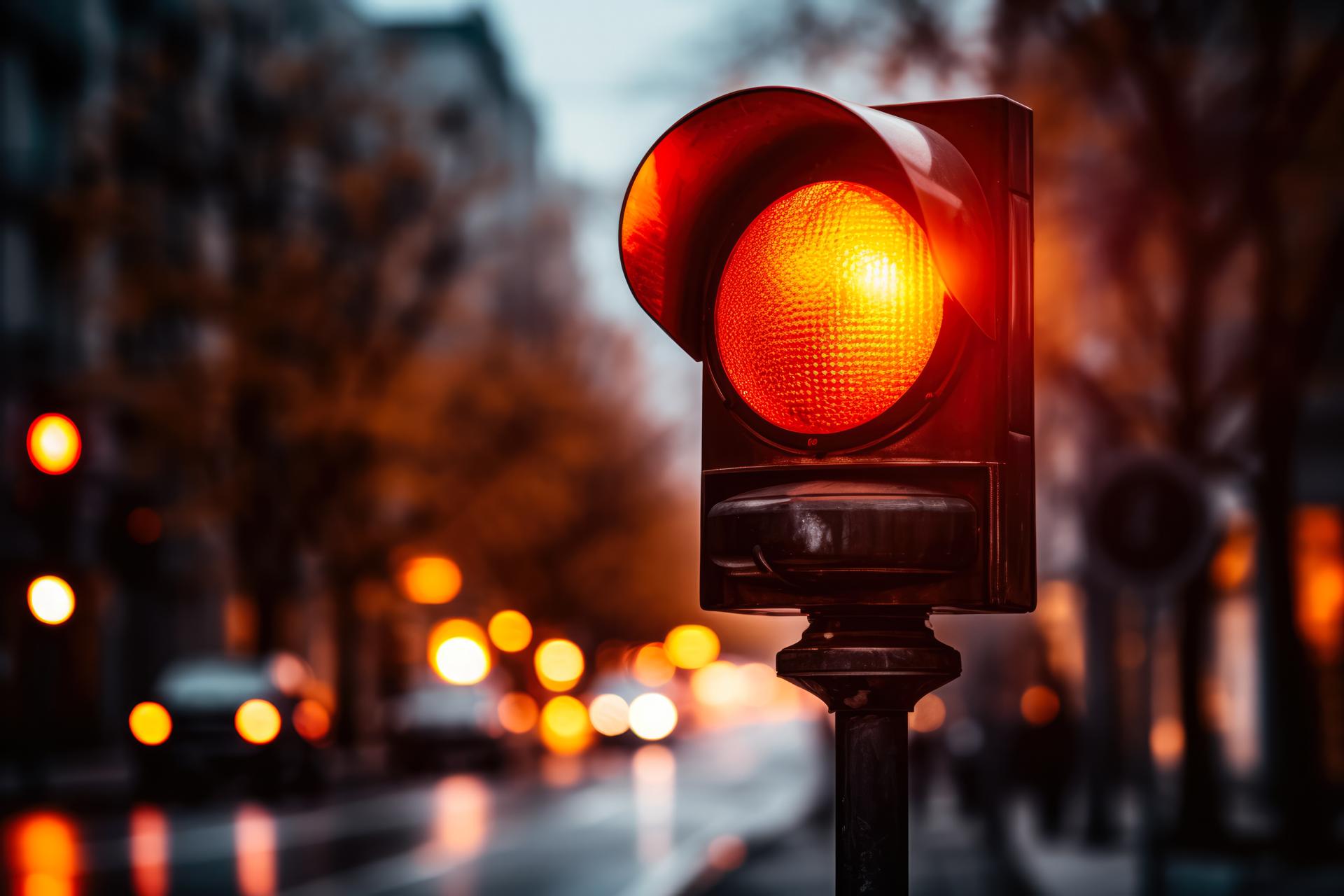
In Idaho, a driver facing a steady red light must stop before entering the intersection. After a complete stop, a right turn on red is typically allowed unless a sign prohibits it (for example, “NO TURN ON RED”). Even when the turn is allowed, the driver must yield to pedestrians lawfully within an adjacent crosswalk and to other traffic lawfully using the intersection.
A “right on red” is not a right-of-way. It’s a permission to proceed only after stopping and yielding appropriately.
What “complete stop” means (and why it matters for crosswalk safety)
A complete stop means the vehicle stops at the stop line (or before entering the crosswalk/closest edge of the intersection if there is no line), pauses long enough to check for conflicts, and then turns only when it’s safe. Rolling through the stop bar—even at 2–3 mph—can put your bumper into the crosswalk where pedestrians have every reason to believe they’re protected.
The “look-left, turn-right” problem: how these crashes happen in Boise
Many right-on-red pedestrian collisions follow the same pattern: the driver’s head is turned left watching traffic gaps, while the crosswalk is to the driver’s right front. This is especially risky when:
Drivers “creep” into the crosswalk for visibility
Some intersections have landscaping, poles, or parked vehicles that tempt drivers to inch forward for a better view. If the vehicle’s front end crosses into the crosswalk, a pedestrian can be struck even at low speed.
Right-turn slip lanes and channelized turns
“Free-flow” right turns can make drivers feel like they’re not entering an intersection at all. Pedestrians can still have a crossing—and drivers still must yield.
Busy corridors and multi-lane approaches
Multi-lane roads increase distractions: drivers watch one lane of traffic while a pedestrian enters from the other side, or a vehicle blocks sightlines until the last moment.
What Idaho law says about pedestrians, crosswalks, and fault
Idaho’s rules depend on where the pedestrian was crossing and whether signals were operating.
| Situation | Driver duty (plain-English) | Pedestrian duty (plain-English) |
|---|---|---|
| Pedestrians in a marked or unmarked crosswalk when signals are not in place or not operating | Must yield—slow or stop if needed to allow safe crossing. | Use the crosswalk and cross prudently. |
| Pedestrian crossing outside a marked crosswalk and outside an unmarked crosswalk at an intersection | Still must drive reasonably and avoid collisions, but pedestrians may be required to yield depending on the specifics. | Must yield the right of way to vehicles. |
| Driver turning right on red at a signalized intersection with a crosswalk | Must stop first, then yield to pedestrians in the adjacent crosswalk before turning. | Follow walk/don’t-walk indicators and cross carefully. |
Important: Even when pedestrians have the right of way, insurance companies may still argue “shared fault” based on visibility, timing, distraction, or whether the pedestrian entered against a signal. Early documentation often makes the difference.
Quick “Did you know?” facts that come up in right-on-red claims
“No Turn on Red” signs control. If a sign prohibits the turn, making it anyway can support negligence and a traffic violation argument.
Stop bars are placed to protect crosswalk space. Stopping “in the crosswalk” is not just discourteous—it’s a common precursor to pedestrian strikes.
Turning vehicles create a different risk than straight-through vehicles. Even low-speed impacts can cause fractures, head injuries, and soft-tissue injuries that don’t feel severe until hours later.
What to do after a Boise pedestrian crash (step-by-step)
1) Put safety and medical care first
Move to a safer place if you can. Call 911. If you hit your head, feel dizzy, lose consciousness, or have neck/back pain, be cautious about “walking it off.”
2) Get the driver’s information and the vehicle details
Photo the license plate, the make/model, and the driver’s insurance card if possible. If the driver leaves, report it immediately and share any partial plate or vehicle description.
3) Preserve the intersection evidence (fast)
Boise-area intersections and nearby businesses may have video, but it can be overwritten quickly. If you can, note: exact intersection, direction of travel, which signal was red/green, whether a “NO TURN ON RED” sign was posted, and where you were in the crosswalk.
4) Don’t guess about injuries or blame at the scene
It’s normal to feel disoriented. Keep statements factual: where you were crossing, what you saw, and what happened. Avoid speculating about speed, timing, or fault.
5) Talk with a local attorney before giving a recorded statement
Insurance adjusters may sound friendly, but their job is to limit payout. A quick legal consult can help protect your medical documentation, wage loss proof, and the evidence needed to show a driver failed to stop or failed to yield.
Local Boise angle: intersections, work zones, and “on-the-job” realities
Boise’s growth means more pedestrians near commercial corridors, new developments, and active construction zones. For construction managers, contractors, and business owners, a pedestrian crash can also affect your ability to supervise sites, drive between projects, and meet deadlines. If the collision happened near a work zone, preserve details such as cones, flaggers, temporary signage, narrowed lanes, and lighting conditions—those facts can become important in reconstructing how a right turn on red became unsafe.
If you’re navigating Boise on foot near high-traffic intersections, treat every right-on-red like a potential conflict: make eye contact with turning drivers when possible, watch for “creep” into the crosswalk, and assume the driver may be looking left—not at you—until you see the vehicle fully stopped.
Talk to Shep Law Group about a Boise pedestrian accident
If you were hit by a right-turn-on-red driver in Boise or anywhere in Ada County, a prompt legal review can help secure video, witness statements, and medical documentation before details fade. Shep Law Group provides compassionate, informed representation focused on practical next steps.
FAQ: Boise right-turn-on-red pedestrian accidents
Is a driver always at fault for hitting a pedestrian during a right turn on red?
Not always. Many cases involve a driver failing to stop or failing to yield to a lawful crosswalk user, but fault can be disputed based on signals, where the pedestrian crossed, visibility, and timing. A careful fact review matters.
What if I were in an unmarked crosswalk?
Many intersections have “unmarked crosswalks” even if there isn’t painted striping. Liability can depend on whether you were crossing at the intersection and whether signals were in place/operating. Document the exact location and corners used.
What if the driver says they “didn’t see me”?
“Didn’t see you” is common in right-on-red crashes and often points to inattention, failure to scan the crosswalk, or creeping into the crosswalk while watching traffic. Video, witness accounts, and scene measurements can be key.
Should I talk to the driver’s insurance company?
You can report basic facts, but consider speaking with an attorney before a recorded statement—especially if you’re still being evaluated for head, neck, back, or orthopedic injuries.
What damages can be claimed after a pedestrian accident?
Common categories include medical expenses, future care needs, lost wages, reduced earning capacity, and pain and suffering. The right categories depend on your injuries, documentation, and the facts of the crash.
Glossary (plain-English)
Adjacent crosswalk
The crosswalk is next to the lane that a driver is using to turn. When turning right on red, drivers must yield to pedestrians lawfully within the nearby crossing.
Marked vs. unmarked crosswalk
A marked crosswalk has painted lines. An unmarked crosswalk can exist at an intersection even without paint, depending on roadway design and legal definitions.
Comparative fault
A legal concept that can reduce a claim if a person is found partially responsible. Insurers often raise it in pedestrian cases, making early evidence preservation especially important.