
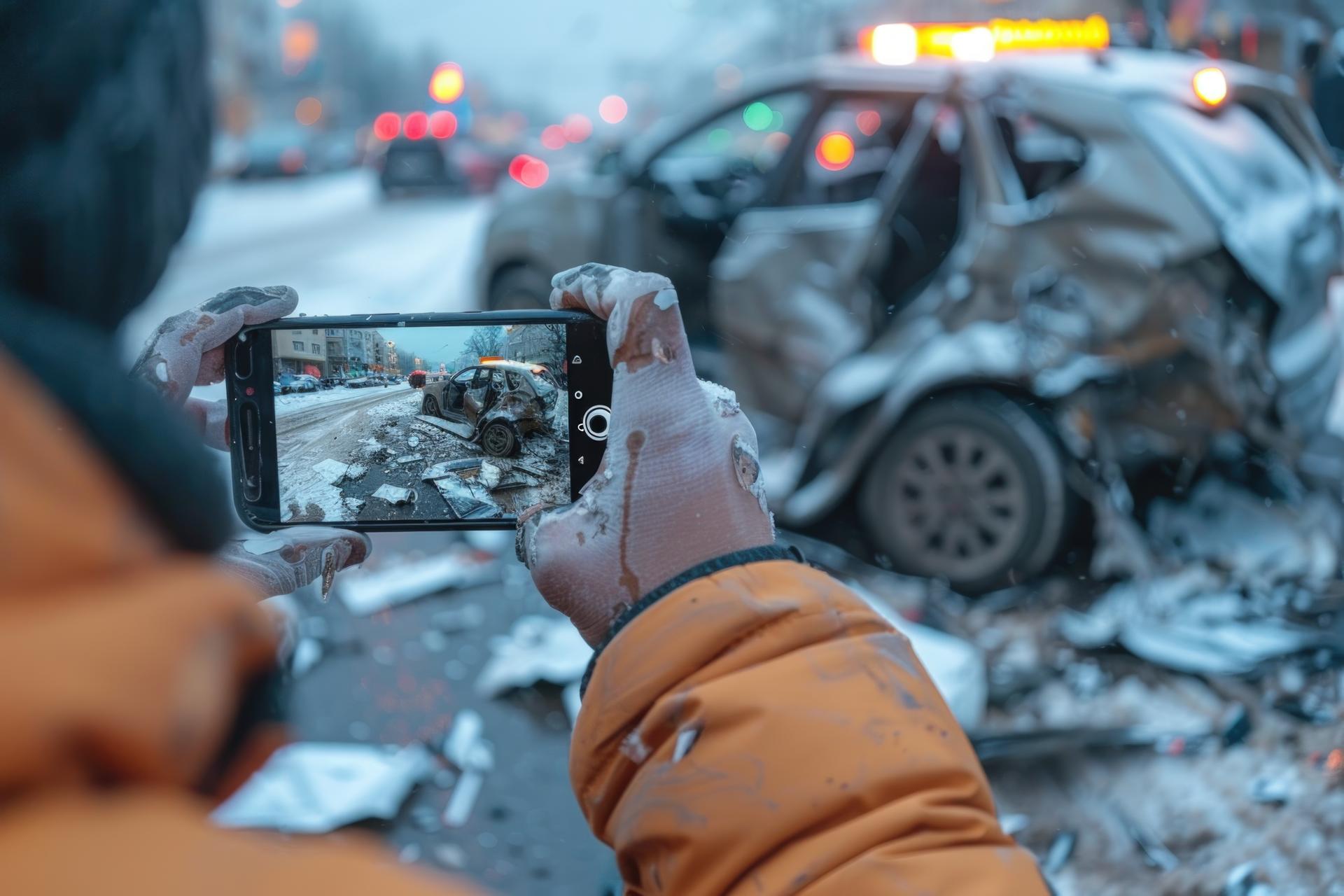
A simple evidence checklist can protect your health, your claim, and your timeline
If you’re in Boise or the Treasure Valley and you’ve just been in a collision, the first priority is safety and medical care. Right behind that is evidence. The reality is that physical scenes change fast, witnesses disappear, and insurance narratives form quickly. This guide explains the most useful Boise car accident evidence to gather, how to store it, and common mistakes that can quietly undermine a valid injury claim.
Why evidence matters so much in Idaho car accident claims
Evidence does two big jobs: it helps prove liability (who caused the crash) and damages (how the crash affected your body, your work, and your life). Idaho claims often come down to details—lane positions, timing at an intersection, whether a driver was distracted, and whether injuries are consistent with the impact.
Two Idaho rules that make documentation especially important
The evidence that tends to move the needle most
You don’t need to gather everything—just the right things. Below is a practical breakdown of what typically helps the most in Boise-area crashes (rear-end collisions on Eagle Road, intersection wrecks near downtown, freeway impacts on I-84, and construction-zone incidents across Ada and Canyon counties).
| Evidence type | Why it matters | How to collect it |
|---|---|---|
| Scene photos & video | Captures impact points, lane positions, skid marks, traffic control devices, weather/lighting | Wide shots first, then close-ups; 15–30 seconds of slow video walking the scene |
| Vehicle damage photos | Helps show force direction and consistency with injuries (e.g., whiplash, back/neck injury) | All corners, license plates, airbags, seatbelts, interior items that broke/shifted |
| Witness names & statements | Independent accounts can defeat “he-said/she-said” disputes | Ask for name + phone + a short recorded note (with permission) |
| Police crash report | Lists parties, insurance, diagram, citations, and initial findings | Order through Idaho Transportation Department (ITD) when available (fee applies) |
| Medical records + timeline | Shows you sought care, symptoms progressed, and treatment was reasonable | Keep discharge papers, visit summaries, PT notes; maintain a symptom journal |
| Work and wage proof | Supports wage loss and job impact (common for contractors and construction managers) | Pay stubs, job calendars, canceled bids, doctor work restrictions |
Police report tip (Idaho): ITD provides options to order a crash report online (often with a stated fee).
Did you know?
Step-by-step: a mobile-first “evidence pack” to build in 20 minutes
If you’re physically able and it’s safe, this sequence helps you capture the most persuasive evidence without missing the basics.
1) Start with wide shots (context beats close-ups)
Take photos from all four directions showing the intersection/roadway, traffic lights or stop signs, turn lanes, construction signage, and where vehicles landed. If you can, include landmarks (street names, nearby businesses) that place the scene in Boise or Meridian clearly.
2) Capture vehicle placement before moving cars (if safe and lawful)
Insurance disputes often focus on angles and lanes. A 10-second video panning from one vehicle to the other can preserve “who was where,” even if later photos are taken after the cars are moved.
3) Get the “identity set”
Photograph driver’s licenses (if exchanged), insurance cards, license plates, and the VIN plate visible through the windshield. If a commercial truck is involved, also note the company name, DOT numbers, and any trailer identifiers.
4) Identify witnesses and lock in a short statement
Ask politely: “Would you be willing to tell me what you saw in a 15-second recording?” If they agree, record on your phone and have them state their name and phone number. If they prefer not to be recorded, get written notes and contact info.
5) Document injuries early (without oversharing)
Take a few photos of visible bruising/cuts over the next several days as symptoms appear. Keep a private daily log with pain levels, sleep impact, missed work tasks, and activity limitations—especially if your job requires lifting, driving, climbing, or supervising job sites.
What not to say (or post) after a Boise car accident
Evidence isn’t only what you collect—it’s also what you accidentally create. These are common “unforced errors” that insurance adjusters look for:
Local Boise angle: where evidence disappears fast
In Boise and the surrounding Treasure Valley, evidence can vanish quickly for a few practical reasons:
Talk with Shep Law Group about your crash evidence
If you’re unsure whether your photos, report details, or medical timeline are “enough,” it’s worth getting clarity early—before recordings disappear and stories harden. Shep Law Group serves clients in Boise, Meridian, Ada County, Canyon County, and across Idaho with practical guidance and compassionate representation.
Frequently asked questions
How do I get an Idaho crash report?
Many Idaho crash reports can be ordered through the Idaho Transportation Department’s crash report services (fees may apply).
What if I didn’t take photos at the scene?
You can still build a strong file using vehicle photos (before repairs), injury documentation, medical records, witness info, and the crash report. If there were nearby businesses or residences with cameras, acting quickly is important because footage can be overwritten.
Can I use my phone at a red light in Idaho?
Idaho’s hands-free guidance has stated the law applies even when stopped at a red light or stop sign, with limited hands-free/one-touch allowances.
What evidence helps prove the other driver was texting?
Photos/video showing phone in hand, witness observations, statements at the scene, and sometimes digital records. This is also an area where early legal guidance can help preserve information appropriately.
How long do I have to file an injury claim in Idaho?
Many Idaho personal injury claims are commonly described as having a two-year filing deadline (often referenced under Idaho Code § 5-219). Because exceptions can exist depending on facts, it’s smart to confirm timelines as early as possible.