
Call for legal service

See If You're Entitled To Compensation

Boise Greenbelt E‑Scooter Accidents: What to Do Next, What Idaho Law May Allow, and How Liability Is Determined

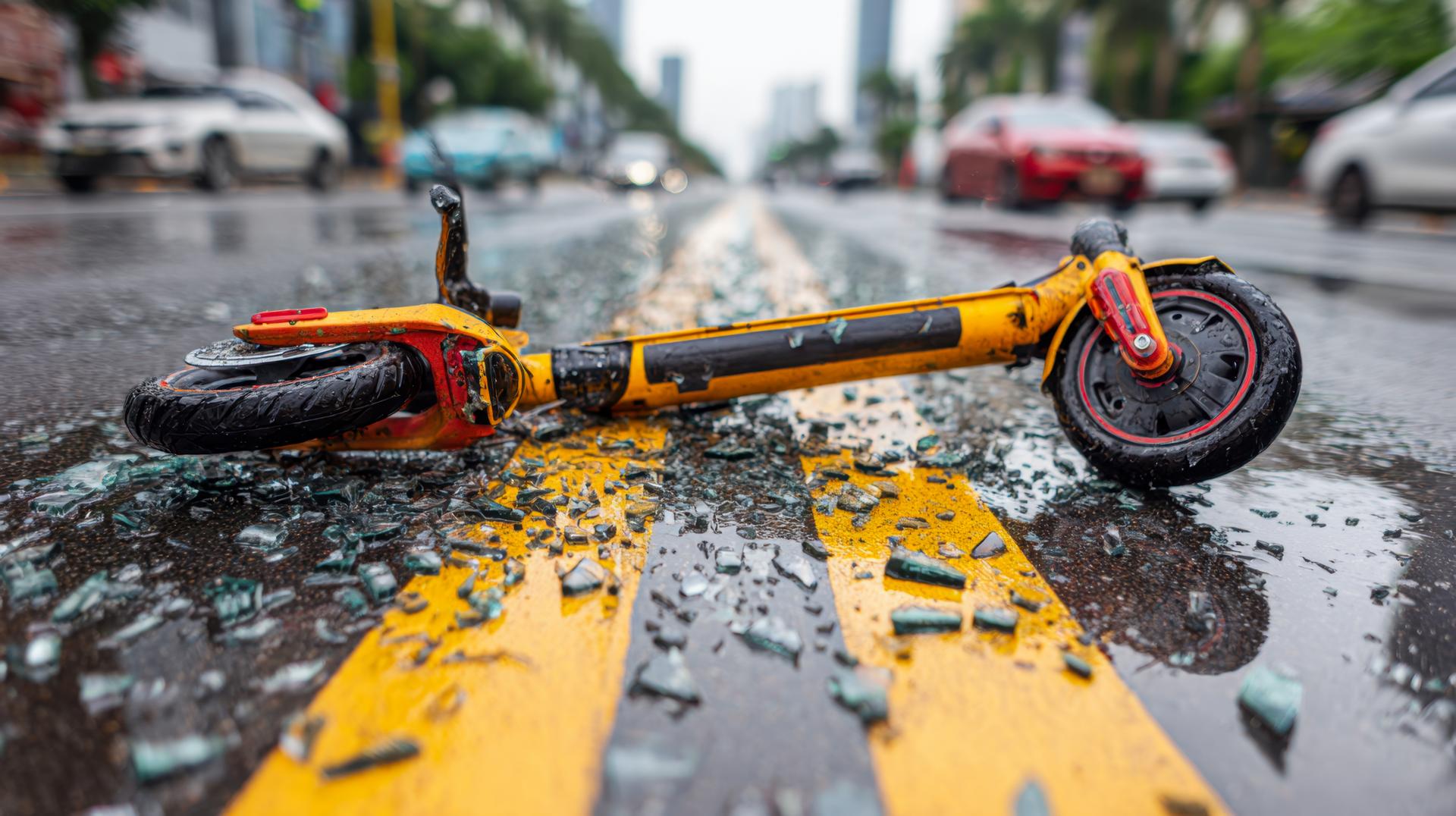
Detwined electric scooter lying on a wet road after an accident in the rain

A practical guide for riders, pedestrians, and families after a Greenbelt collision

Boise’s Greenbelt is one of the most used shared paths in Idaho—walkers, runners, cyclists, and e‑scooter users are often just feet apart. When a crash happens, the aftermath can feel confusing: Were e‑scooters allowed where the incident occurred? Does it matter if it was a rental or a privately owned scooter? What if a rider was going “too fast” even without a posted speed limit?

This page answers those questions in a clear, Boise-focused way and outlines the steps that protect both your health and your potential claim. If you need help sorting out the legal side, contact Shep Law Group to discuss what happened.

Why Greenbelt e‑scooter accidents are different than street crashes

On a roadway, lanes and traffic controls create predictable movement. On the Greenbelt, it’s a “shared-use” environment—people stop to look at the river, kids zig-zag, dogs cross suddenly, and riders pass closely. These details matter because most Greenbelt injury claims come down to everyday behavior questions:

Was the rider operating at a safe speed for conditions?
Did the rider give an audible warning when passing? Boise’s municipal rules for bikes/e-bikes/e-scooters include an audible-warning requirement when overtaking a pedestrian from behind on a bike path/bike lane.
Was someone distracted? Headphones, texting, or looking down at a navigation map can create a split-second failure to yield or slow.
Boise has also recently moved toward additional safety controls for shared devices—local reporting notes a reduced speed setting for Lime devices on the Greenbelt/downtown area, reflecting increased safety focus on mixed-use corridors.
Common crash scenarios
Passing too closely, sudden pedestrian movement, crowded bridges/ramps, blind corners, mixed speeds, night/low-visibility riding, or loss of control on debris/gravel.
Common injuries
Wrist/forearm fractures, facial injuries, dental trauma, concussion, shoulder dislocations, back & neck injuries, road rash, and soft-tissue sprains.
Why does evidence disappear fast
Rental scooters move, witnesses leave, lighting changes, and minor injuries can worsen days later. Getting documentation early is often the difference-maker.

Are e‑scooters allowed on the Boise Greenbelt?

The short version: rules depend on local ordinance and the type of device. Boise’s municipal code includes a dedicated chapter for bicycles, e-bikes, and e-scooters, and Boise has permitted shared devices in designated areas, including the Greenbelt, with operational rules (like passing etiquette and parking requirements).

There’s also a critical legal nuance that surprises many people: Idaho’s “electric personal assistive mobility device” definition is narrow (commonly associated with self-balancing two-wheeled devices), while many “stand-up” e-scooters are governed primarily through local rules and how the city classifies/regulates them for operation in public spaces.

If a crash happened, what matters for your case is less about internet debates and more about what ordinance applied at the location (Boise vs. Garden City or another jurisdiction along the river) and whether the person operated reasonably under the conditions.

Practical takeaway
Even if a rider is “allowed” to be on the Greenbelt, they can still be liable for injuries if they rode too fast for conditions, failed to warn when passing, or operated carelessly around pedestrians.

Step-by-step: what to do after a Boise Greenbelt e‑scooter accident

1) Put safety first and check for head/neck symptoms

If anyone hits their head, loses consciousness, feels dizzy, nauseated, confused, or has neck pain, treat it as urgent. Concussions and neck injuries are frequently underestimated right after a fall.

2) Call law enforcement or request medical response when appropriate

A formal report can help clarify who was involved, where it occurred, and whether a shared-device ID or operator information was captured.

3) Photograph the scene as an investigator would

Use your phone to capture:
• The trail section (wide shot), nearby landmarks, and lighting conditions
• The scooter (close-ups of brand, serial/device number, damage)
• Any debris, gravel, uneven pavement, or construction signage
• Injuries (initial bruising/road rash often change quickly)

4) Identify witnesses and get contact info immediately

Witnesses are especially important on the Greenbelt because there may not be dashcam footage, and fault often depends on speed, spacing, and passing behavior.

5) Don’t “repair” the story in texts or app messages

It’s natural to say “I’m fine” or “my fault” in the moment. Those statements can be misunderstood later. Stick to facts: where, when, what direction, and what you observed.

6) Get a medical evaluation and follow through

Gaps in care are one of the most common ways insurers argue an injury wasn’t serious or wasn’t caused by the crash.

7) Preserve app and device details (if a rental was involved)

Screenshots matter: ride receipt, start/end time, map route, device ID, and any in-app incident reporting. That data may become crucial if you later need to prove who had the device and when.

How liability is determined in a Greenbelt e‑scooter injury claim

Liability usually turns on negligence (carelessness) and comparative fault (whether more than one person contributed). On a shared path, it’s common for each side to claim the other “came out of nowhere.” Evidence resolves that:
Question Why it matters Helpful evidence
Was the rider passing from behind? Passing duties and safe spacing often fall on the overtaking rider. Witnesses, injuries pattern, app route data, and scene photos.
Was an audible warning given? Local rules and trail etiquette expect warnings when overtaking pedestrians. Witness statements, audio/helmet cam footage, and immediate admissions.
Was speed reasonable for conditions? Even without a posted sign, unsafe speed in crowds can be negligent. Crowd density photos, location context, device settings, witness estimates.
Was there a property hazard? A defect (debris, broken pavement) can raise separate responsibility issues. Close-up photos, measurements, maintenance/repair timeline, prior complaints.
Depending on the facts, responsible parties might include the scooter operator, another path user who created a hazard, or (in some situations) an entity responsible for maintaining a dangerously defective condition. Shared-device situations can also raise questions about training prompts, geofencing/speed controls, and whether the rider followed app safety rules.

Local Boise angle: where Greenbelt crashes often happen

Boise’s Greenbelt includes pinch points—bridges, underpasses, tight curves, and high foot traffic areas near parks and downtown access. Accidents are more likely when speed stays high as space narrows. A practical Boise rule of thumb: if you can’t safely pass with room, don’t pass yet.

Also note that portions of the Greenbelt connect through multiple jurisdictions. If your collision occurred near a boundary (for example, around Garden City areas), the applicable ordinance and enforcement approach may differ—that’s one reason precise location documentation matters.


If you work in construction or manage job sites
Greenbelt injuries can disrupt physically demanding work quickly—missed time, restrictions, and follow-up care. Keeping a simple injury journal (pain levels, sleep impact, work limitations, mileage to appointments) can help document the real-world effects beyond the initial ER or urgent care visit.

Talk to Shep Law Group about your Boise Greenbelt e‑scooter accident

If you were injured on the Greenbelt—whether you were walking, cycling, or riding—getting clarity early can prevent costly missteps with insurers and documentation. Shep Law Group serves Meridian, Boise, Ada County, Canyon County, and clients statewide.
Tip: Bring photos, witness names, medical visit details, and (if applicable) the rental device ID or ride receipt.

FAQ: Boise Greenbelt e‑scooter accidents

Do I have a claim if I was a pedestrian hit by an e‑scooter on the Greenbelt?
Potentially, yes. Claims often hinge on whether the rider used reasonable care—safe speed, safe passing distance, and giving an audible warning when overtaking. Evidence from witnesses and scene photos is especially important on shared paths.
What if I was riding and a pedestrian stepped into my path?
That can become a comparative-fault question. Greenbelt collisions often involve shared responsibility, depending on visibility, speed, warning, and how suddenly the pedestrian moved. Documenting the exact location and obtaining witness statements helps clarify what was reasonably avoidable.
Does it matter if it was a rental scooter (like Lime) vs. a privately owned scooter?
It can. Rentals may provide app data (time, route, device ID) and may have local speed controls in certain zones. Privately owned scooters may raise different questions about maintenance and equipment condition. In both cases, the rider’s conduct is still central.
Should I talk to the insurance company right away?
You can report the basic facts, but be careful with recorded statements or quick settlement offers before you understand the full medical picture. Many injuries (especially head, neck, and soft tissue injuries) evolve over days, not hours.
What compensation might be available after a Greenbelt crash?
Depending on the facts, damages can include medical bills, future treatment, lost wages, reduced earning capacity, pain and suffering, and out-of-pocket costs (like travel to appointments). The specifics depend on liability and the severity of the injury.
This content is general information, not legal advice. Every case is fact-specific.

Glossary (plain-English)

Comparative fault
A legal concept where responsibility can be shared. If both parties contributed to the crash, compensation may be reduced based on each person’s percentage of fault.
Negligence
Failing to use reasonable care under the circumstances, like riding too fast for a crowded path or passing without warning.
Audible warning
A sound used to alert someone you’re passing (voice call-out or a bell). Boise’s local rules for shared path passing commonly require this when overtaking pedestrians from behind.
Geofencing
A GPS-based control that can slow or restrict rental scooters in specific zones (for example, busy trail segments).

Related Blogs

Accessibility Toolbar