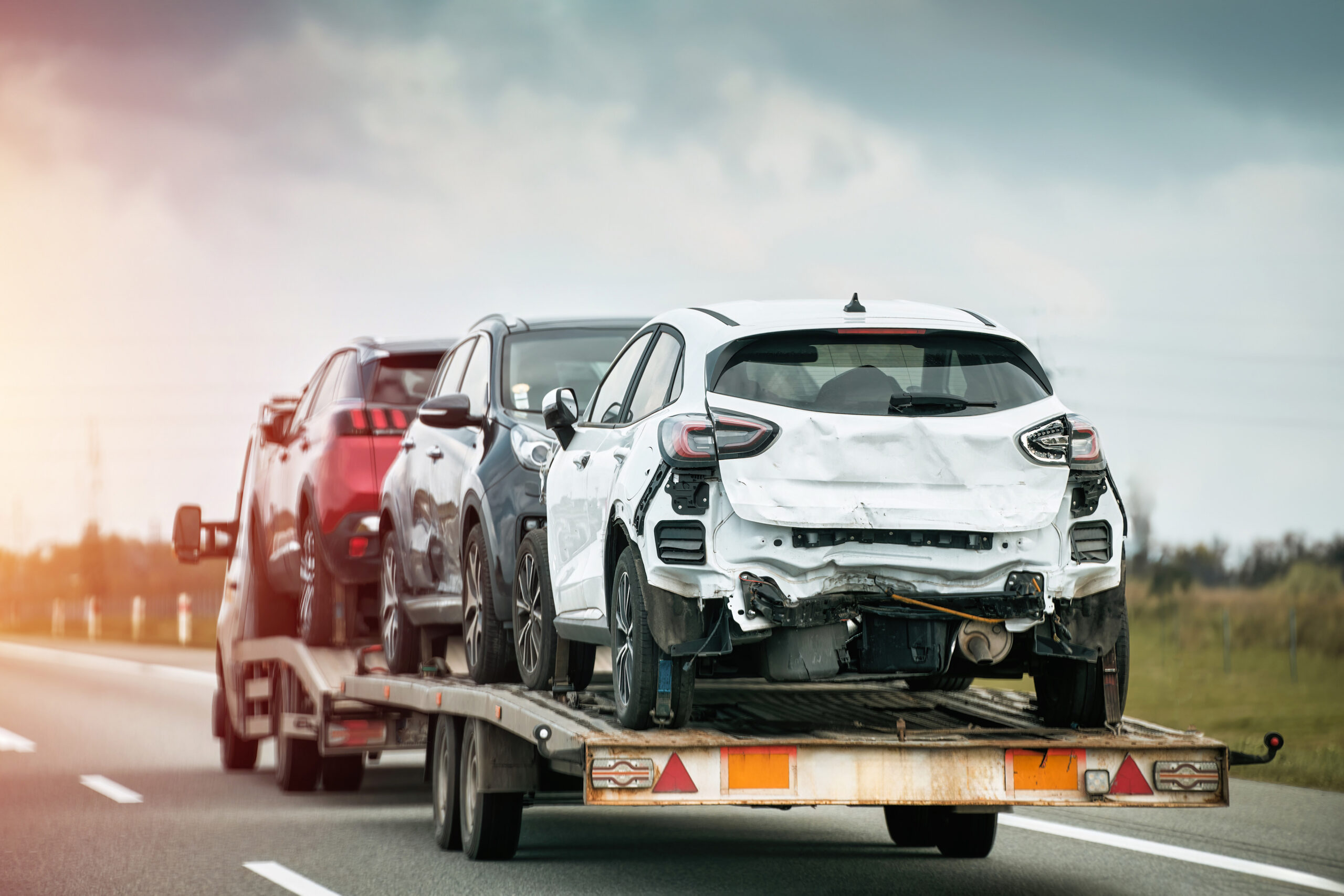
Two-car crashes raise one question: who caused it? Crashes with three or more vehicles raise several at once. Which driver started the chain, how much of the blame belongs to each, and which insurance company pays which part? At Shep Law Group, we see multi-vehicle cases on Eagle Road, Chinden, I-84, and the Connector, and the answer almost always comes back to two Idaho statutes. This post uses three realistic crashes to show how Idaho multi-vehicle accident liability works in practice.
The Two Idaho Rules That Control Multi-Vehicle Accident Liability
Fault is compared to each driver individually
Idaho Code § 6-801 is the state’s modified comparative fault rule, often called the 50% bar. We cover the basics in our explanation of Idaho’s 50% bar rule, so here is the part that matters most when three or more drivers are involved: Idaho compares your fault to each other driver separately. The Idaho Supreme Court adopted this “individual rule” in Odenwalt v. Zaring, and Idaho Code § 6-803(3) now says it directly. You can recover from any driver whose share of fault is greater than yours, and nothing from a driver whose share is equal to or less than yours.
Each driver generally pays only their own share
Idaho Code § 6-803 limits joint and several liability. Judgment against each at-fault party is entered “in an amount equal to each party’s proportionate share of the total damages awarded.” The exceptions are narrow: parties acting in concert on a common plan, and a person acting as another’s agent or employee (which is how a trucking company or employer can answer for its driver).
When a case goes to trial, Idaho Code § 6-802 allows the jury to assign a percentage of fault to each party. Under Idaho case law, the jury may also consider the fault of people who aren’t in the lawsuit at all, such as a driver who left the scene or someone who already settled.
Scenario 1: Chain-Reaction Rear-End Crash on Eagle Road
Traffic slows at a light. Driver A, looking at a phone, rear-ends Driver B, who was following too closely. B is pushed into your car. You were stopped and did nothing wrong. Your damages total $100,000.
| Driver | Fault | Pays you |
|---|---|---|
| You | 0% | N/A |
| Driver A (distracted) | 80% | $80,000 |
| Driver B (following too closely) | 20% | $20,000 |
You’d open claims with two insurers, and each would evaluate only its own driver’s share. If Driver A’s liability limits are lower than Driver A’s assigned share, the gap doesn’t shift to Driver B; your own underinsured motorist coverage may be the next place to look. For how Idaho treats the driver in the back in simpler two-car cases, see who is at fault in Boise rear-end accidents.
Scenario 2: Intersection Crash Where You Share Some Blame
You enter an intersection a little too fast on a stale yellow. Driver A is creeping over the stop line. Driver B runs a clear red light and hits both of you. Your damages total $200,000.
| Driver | Fault | Can you recover? | Amount |
|---|---|---|---|
| You | 20% | N/A | N/A |
| Driver A | 15% | No, your 20% is greater than A’s 15% | $0 |
| Driver B | 65% | Yes | $130,000 |
You recover 65% of your damages from Driver B. Your own 20% reduces the total, and Driver A’s 15% is simply not collectible because your fault is greater than A’s. This is where the individual rule has real consequences: a small shift in the percentages between you and Driver A changes whether A’s insurer pays anything. If you want to see more ways shared blame affects the final number, our examples of shared fault in Idaho settlements walk through the math.
Scenario 3: I-84 Lane Change With a Driver Who Leaves
On I-84 near the Meridian interchange, an unidentified driver cuts across two lanes. Driver A swerves late and sideswipes you, and you drift partly into the shoulder while correcting. The first driver never stops. Your damages total $150,000.
| Driver | Fault | Pays you |
|---|---|---|
| You | 15% | N/A |
| Driver A | 45% | $67,500 |
| Unidentified driver | 40% | Not collectible from Driver A |
Driver A pays only A’s 45% share. The unidentified driver’s 40% ($60,000) doesn’t transfer to Driver A, even though that driver can’t be found. Depending on your policy language, your own uninsured motorist coverage in Idaho may respond to the missing driver’s share, and hit-and-run claims often have strict reporting conditions.
How Multi-Driver Insurance Claims Usually Unfold
- Several adjusters, several stories. Each insurer has a reason to push fault toward the other drivers, including you.
- Settlements come one at a time. Under Idaho Code § 6-805, when a party who is only severally liable settles, the settling party’s fault can still be presented to the jury, and the remaining drivers typically answer only for their own shares.
- Evidence matters more. Crash reports, vehicle damage patterns, event data, and dashcam or traffic video help sort out which impact came first.
- Your own coverage may be in play. MedPay, collision, and UM/UIM coverage can fill gaps while the liability carriers argue.
Winter pileups add weather and visibility questions to the same framework; our post on winter car accidents in Boise addresses those.
Frequently Asked Questions About Multi-Car Crash Fault in Idaho
Who pays in a three-car accident in Idaho?
Each at-fault driver’s insurer generally pays that driver’s percentage of your damages, as long as that driver’s fault is greater than yours.
Can I collect everything from the driver with the most insurance?
Usually not. Idaho’s several liability rule means one driver generally doesn’t cover another driver’s share, except in narrow situations such as an employer answering for an employee.
What if two drivers blame each other and both blame me?
That’s common. Fault percentages are negotiated with each insurer and, if the case doesn’t settle, decided by a jury on a special verdict form.
Get Help Sorting Out a Multi-Vehicle Crash
When three or more drivers are involved, small differences in the fault percentages can decide who pays and how much. Our Idaho car accident lawyers can gather the evidence, deal with each insurer, and protect your share of the recovery. Contact Shep Law Group for a free consultation. This article is general information, and the scenarios are illustrations, not predictions for any case.