
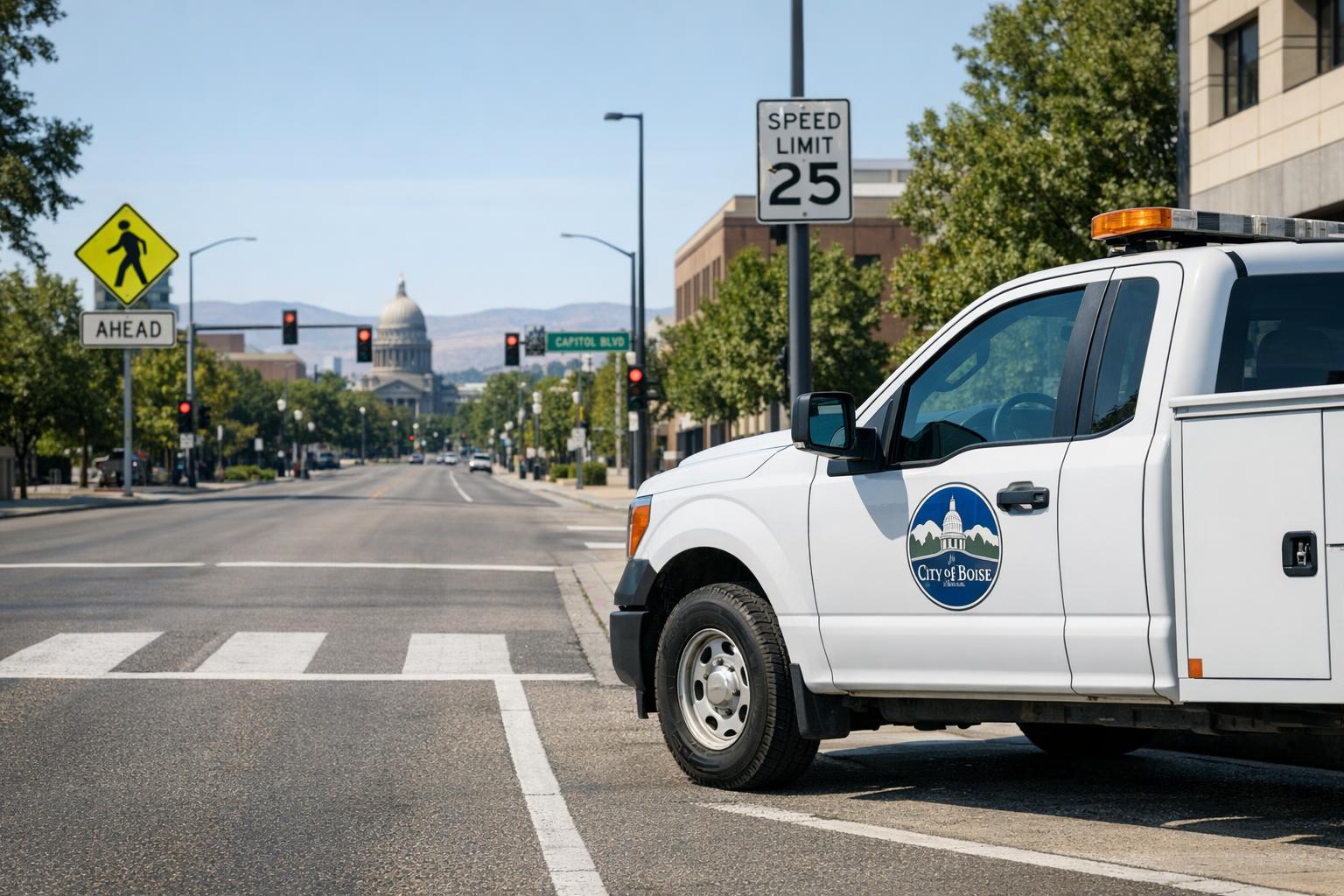
A crash with a government vehicle (or on a government-controlled road) follows different rules
When a motor vehicle crash involves an Idaho state agency, a city, a county, or another public entity, your next steps can look similar to any other injury claim—medical care, photos, witness info, and insurance calls. The legal timeline, however, often changes fast. Under the Idaho Tort Claims Act (ITCA), you may need to send a formal Notice of Tort Claim within 180 days of the loss, even though you might have up to two years to file suit. Missing the notice deadline can end a claim before it begins.
Important: This page is general information for Idaho. It’s not legal advice for your specific situation. Deadlines can depend on the entity involved, the date of loss, and how the claim is served.
1) When does the Idaho Tort Claims Act apply in a car crash?
The ITCA applies when you’re pursuing a negligence claim (or other tort claim) against a governmental entity in Idaho or, in many cases, a government employee acting within the scope of their job. In the auto context, common examples include:
• A crash involving a city vehicle (public works, parks, utilities), county vehicle, or state vehicle
• A collision with a school district vehicle (including certain bus-related incidents)
• A wreck involving a police vehicle (including claims about pursuit-related conduct in some situations)
• Dangerous conditions tied to road maintenance or signage involving an entity responsible for a roadway segment
A key first step is correctly identifying who controlled the vehicle and who controlled the roadway at the location of the crash. In Boise and the Treasure Valley, responsibility may be city, county, state, or another district/authority, depending on the location and project.
2) The 180-day Notice of Tort Claim deadline (the trap people don’t see coming)
For many ITCA cases, you must deliver a written notice of claim to the proper governmental entity within 180 days from the date of loss. This is not the same thing as “opening an insurance claim” or leaving a voicemail with a department. It’s a formal statutory notice requirement, and courts can treat failure to comply as fatal to the claim.
Practical example
If a crash happened on March 13, the 180-day notice deadline would typically fall around mid-September of the same year. Waiting until “the two-year statute” is on the horizon can be too late if a government entity is involved.
3) What the notice usually needs to include
Idaho law requires claims presented to a governmental entity to accurately describe the conduct/circumstances, the injury or damage, the time and place, known persons involved, and the amount of damages claimed, among other required details. The goal is to give the entity enough information to investigate and evaluate the claim.
• Date, time, and location of the crash
• What happened and why you believe the entity/employee was at fault
• Injuries and medical treatment to date (and expected future care if known)
• Property damage information (vehicle, contents, equipment)
• Names of known involved parties and witnesses
• A stated dollar amount of damages (this can be a high-stakes choice—get guidance)
4) The two-year lawsuit deadline (statute of limitations) still matters
Even when a notice is timely, the ITCA includes a limitation of actions provision requiring that an action generally be started within two (2) years after the claim arose (or reasonably should have been discovered, depending on the facts). That’s separate from the 180-day notice rule—so you’re managing two clocks at once: the notice clock and the lawsuit clock.
Quick timeline table: standard crash vs. ITCA crash
| Issue | Typical private-party crash (general rule) | Crash involving a government entity (ITCA) |
|---|---|---|
| Early written claim requirement | Often no statutory “notice” requirement (insurer reporting is still important) | Often yes: Notice of Tort Claim is commonly due within 180 days |
| Deadline to file lawsuit | Often 2 years for injury claims (many scenarios) | 2 years under ITCA limitation of actions (with nuance) |
| Common pitfall | Underestimating injury severity or waiting to treat | Missing the 180-day notice or serving the wrong entity |
Tip: If you suspect a government entity might be involved, treat the first 30–60 days after the crash as the “decision window” to confirm who’s responsible and preserve the claim path.
How to protect your claim after a government-involved motor vehicle crash
Document the scene fast
Photos of vehicle positions, skid marks, road defects, signage, weather, and any fleet markings on the other vehicle can matter more than you’d expect. If the claim involves road conditions, return soon to document changes.
Get a medical evaluation early
In crashes, “I’m fine” can turn into back/neck symptoms days later—especially for working professionals who push through pain. Early documentation helps connect injuries to the collision.
Confirm the correct governmental entity
City vs. county vs. state can be a real question in Ada and Canyon County corridors. Serving the wrong entity can waste the time you don’t have.
Construction and business owners: a note on lost time and documentation
If you manage crews, bids, or projects, track missed workdays, jobsite restrictions, subcontractor costs, rental vehicles/equipment, and any delays tied to medical appointments or physical limitations. For many professionals, the real financial impact is not just medical bills—it’s interrupted productivity and project momentum.
Did you know? Quick ITCA crash facts
• A “claim” against a government entity often requires a written notice—an insurance call alone may not satisfy the statute.
• The 180-day notice deadline can arrive long before you finish treatment or know your long-term prognosis.
• Even with a timely notice, you still must monitor the two-year deadline to file suit in many cases.
• Early investigation matters: video, fleet GPS data, and roadway maintenance records may not be retained forever.
Boise & Treasure Valley local angle: where ITCA issues show up
In Boise, Meridian, and across Ada and Canyon County, government-related crash issues often arise in everyday situations: utility and public works traffic, construction and maintenance zones, school-related traffic patterns, and busy commuter corridors where agency vehicles are constantly on the move. If your crash happened near a work zone, along a recently modified corridor, or involved a vehicle with government markings, it’s worth verifying early whether the ITCA notice process applies.
Local takeaway: If there’s even a chance a public entity is involved, don’t wait for a “final diagnosis” before getting legal clarity on notice and service requirements. The timeline doesn’t pause while you recover.
Talk with Shep Law Group about your Boise-area crash
If your motor vehicle crash may involve a city, county, or state entity, timing and paperwork can be as important as fault. A quick review can help you confirm the right entity, protect notice deadlines, and map out next steps.
Request a Consultation
Mobile-friendly contact page for fast follow-up.
FAQ: Idaho Tort Claims Act motor vehicle crash questions
What if I’m not sure whether the other driver was a government employee?
Start by reviewing the police report, photos of the vehicle (logos, unit numbers), and any exchange-of-information paperwork. If the vehicle was owned by a city/county/state (or the driver was on duty), the ITCA may apply. Because the notice deadline can be short, it’s smart to confirm early.
Is the 180-day notice the same as the two-year statute of limitations?
No. The 180-day requirement is typically a pre-suit notice. The two-year period is often the deadline to file a lawsuit. You may need to satisfy both.
Can I wait to send notice until I know my total medical costs?
Waiting is risky. Many people don’t know the full extent of their injuries within 180 days. A timely notice can preserve the claim while you continue treatment and gather documentation.
What if the crash involved a road hazard instead of a government vehicle?
The key question becomes who controlled and maintained that road segment and what duty applied. Preservation of evidence (photos, measurements, witness statements) can matter because conditions may change quickly after complaints or repairs.
Do ITCA rules apply if the at-fault driver was a federal (U.S.) government employee?
Federal claims often follow a different framework (commonly under the Federal Tort Claims Act). If there’s any possibility a federal agency was involved, treat it as a separate analysis and get guidance quickly because the process and forms differ.
Glossary
Idaho Tort Claims Act (ITCA)
The Idaho law that governs when and how claims may be brought against governmental entities and their employees, including notice rules and limitations.
Notice of Tort Claim
A formal written notice delivered to the proper governmental entity within a specified time (often 180 days) describing the claim and damages.
Statute of Limitations
The legal deadline to file a lawsuit in court. For many ITCA matters, this is commonly two years, but details can vary with the facts.